Why Now
Space systems are becoming more power intensive.
- More satellites
- Larger platforms
- Onboard compute / data centers
- Longer missions

Space
In space, what matters is the power you have left at end of life. EpiNex® wafers can be engineered with thin silicon and graded doping profiles to maintain higher efficiency as radiation damage accumulates.
What does this mean for my satellite?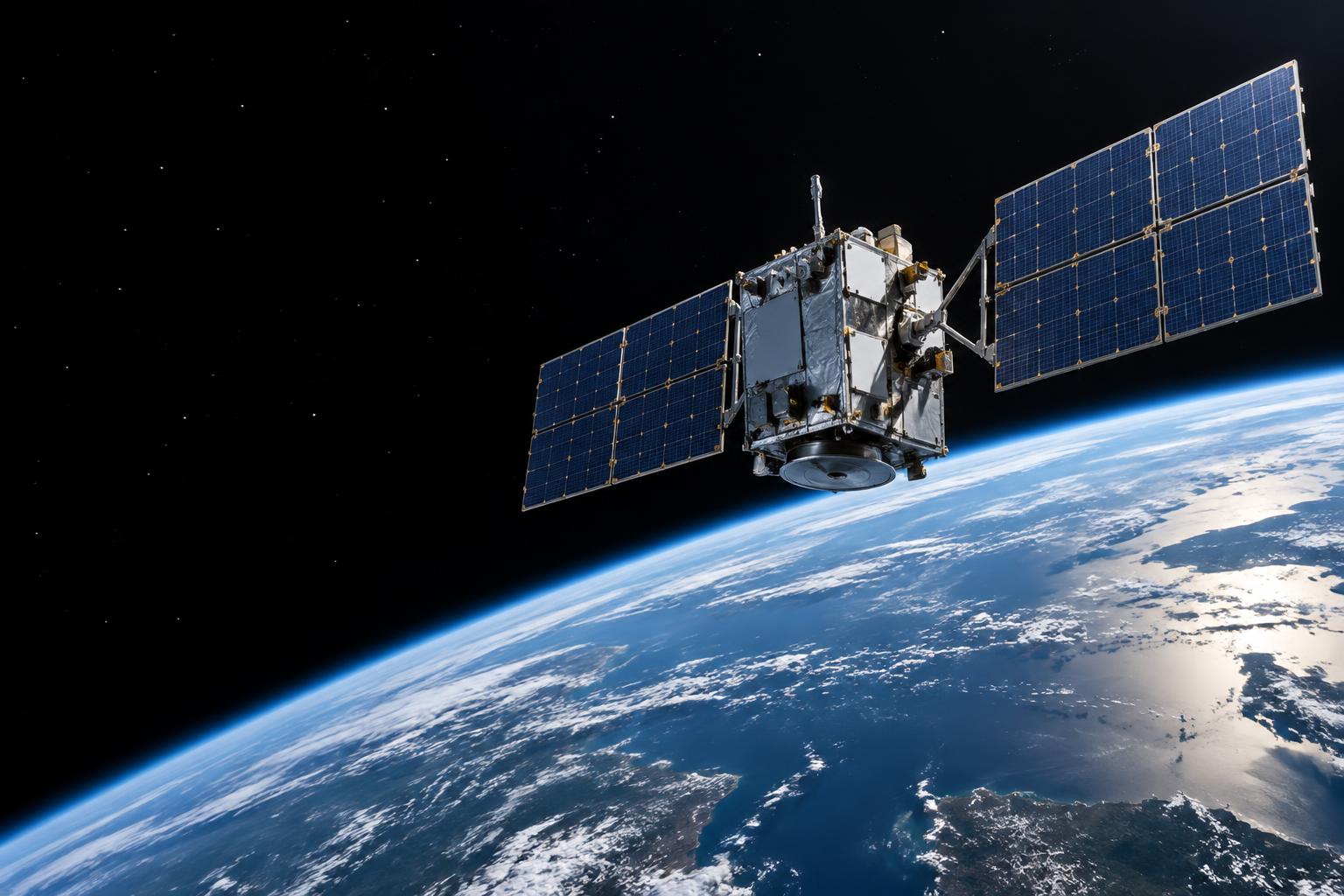
The space proposition
Space systems are becoming more power intensive.
Radiation degrades solar-cell performance over the mission. What matters is power at end of life, not just efficiency at launch.
Epitaxial growth allows the wafer itself to be designed for the mission.
Engineered dopant gradients create a drift field that helps preserve carrier collection as radiation damage accumulates. Designed for higher EOL performance.
At the reported 5 MeV proton condition, graded EpiNex® achieved 18.0% post-irradiation efficiency versus 16.8% for the controls.
Contact us
Contact our team at . Our team is here to help.