01
More satellites
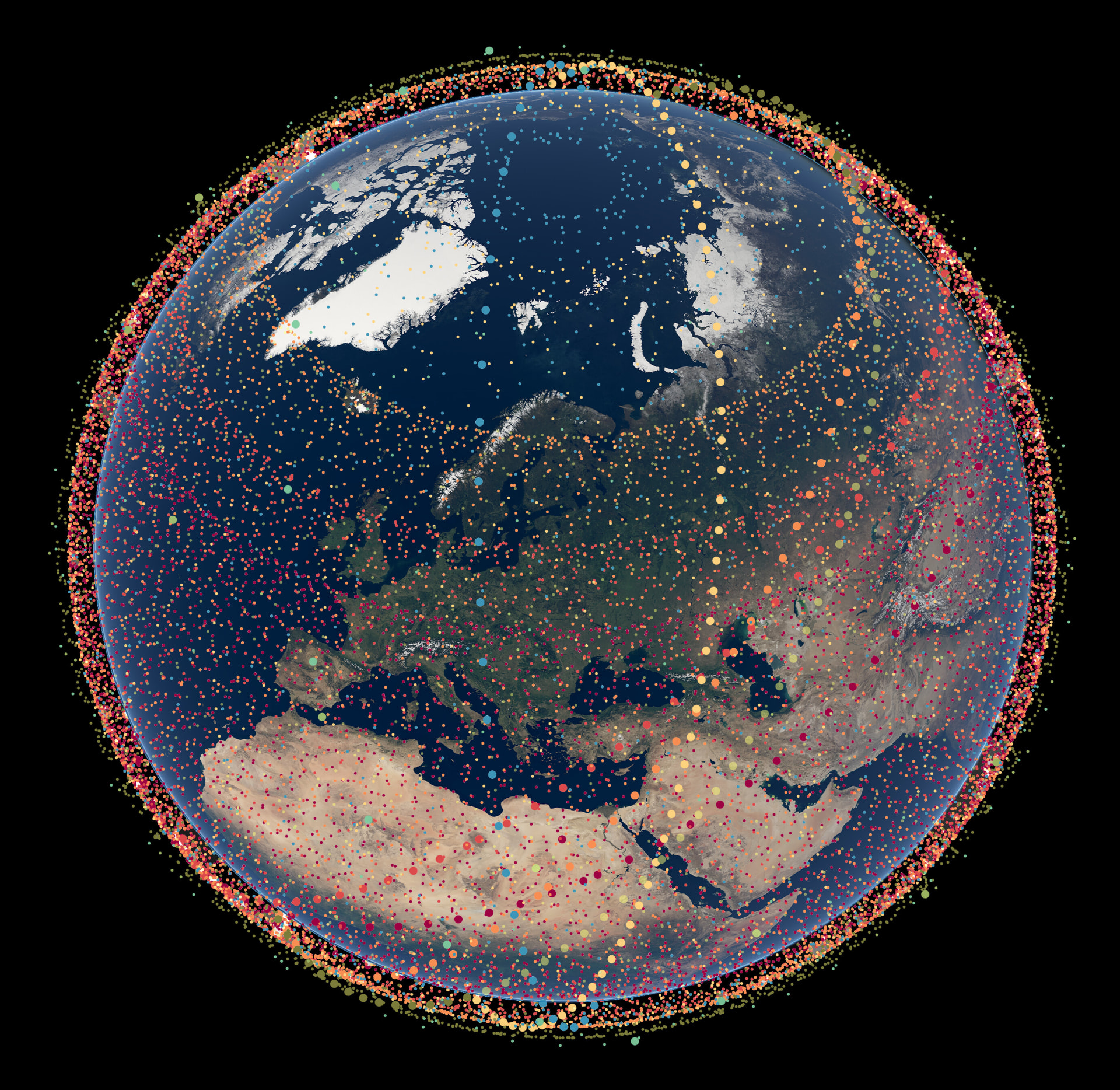
Over 17,000 satellites are now active in orbit, with mega-constellations, broadband and direct-to-cell services driving continued growth and demand for reliable power.
More satellites. More demand for power.

Space / Why space · Why now
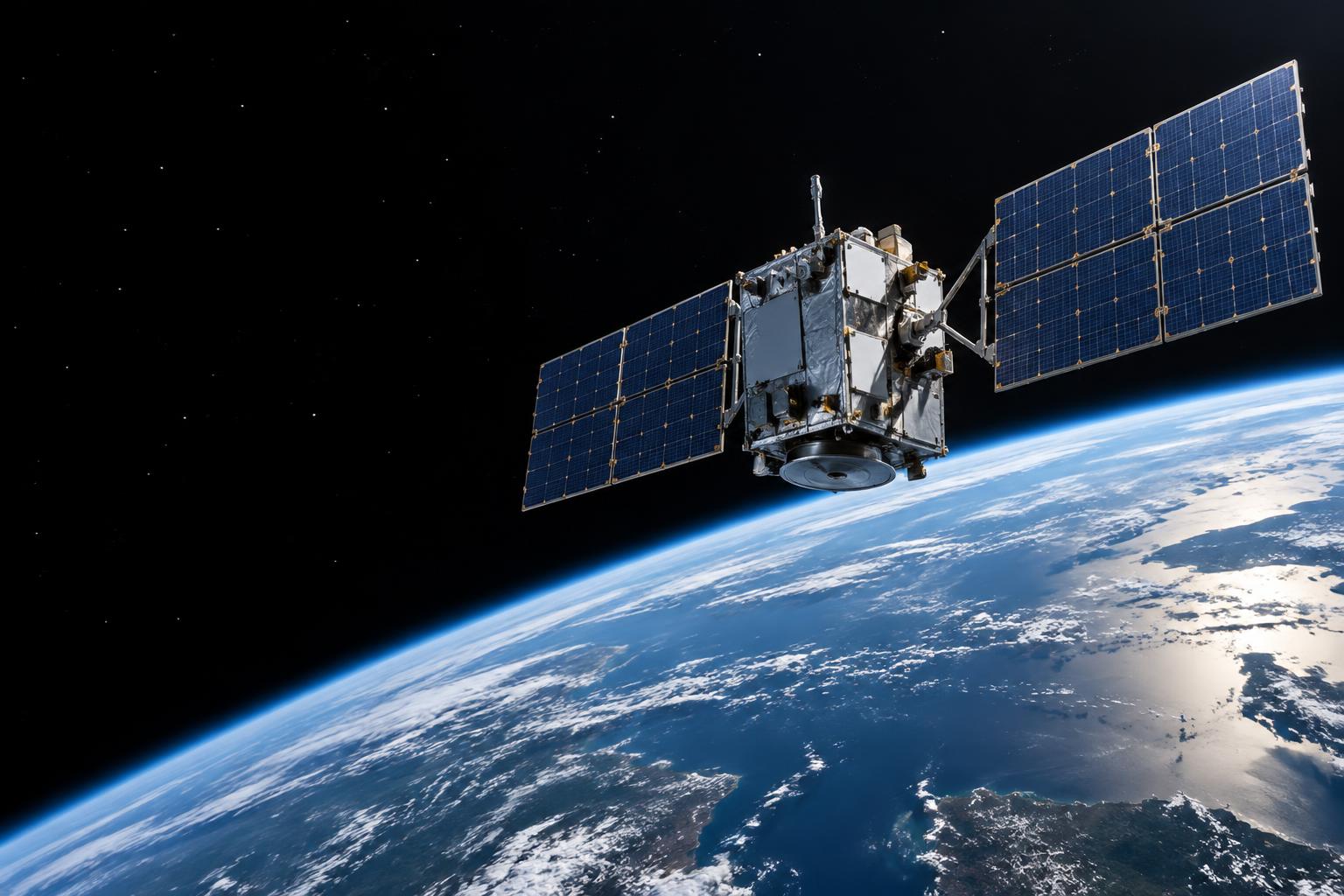
The next generation of LEO and MEO satellites demands more power. But radiation progressively reduces solar cell efficiency. What ultimately matters is how much power the solar array can deliver at the end of the mission.
Why nowThree converging trends
1–5 kW
Traditional LEO
15–20+ kW
Large GEO
15–20 kW
High-power LEO today
100–200 kW+
Emerging orbital data centers
Illustrative spacecraft electrical power classes; not a time-series forecast.
Over 17,000 satellites are now active in orbit, with mega-constellations, broadband and direct-to-cell services driving continued growth and demand for reliable power.
More satellites. More demand for power.
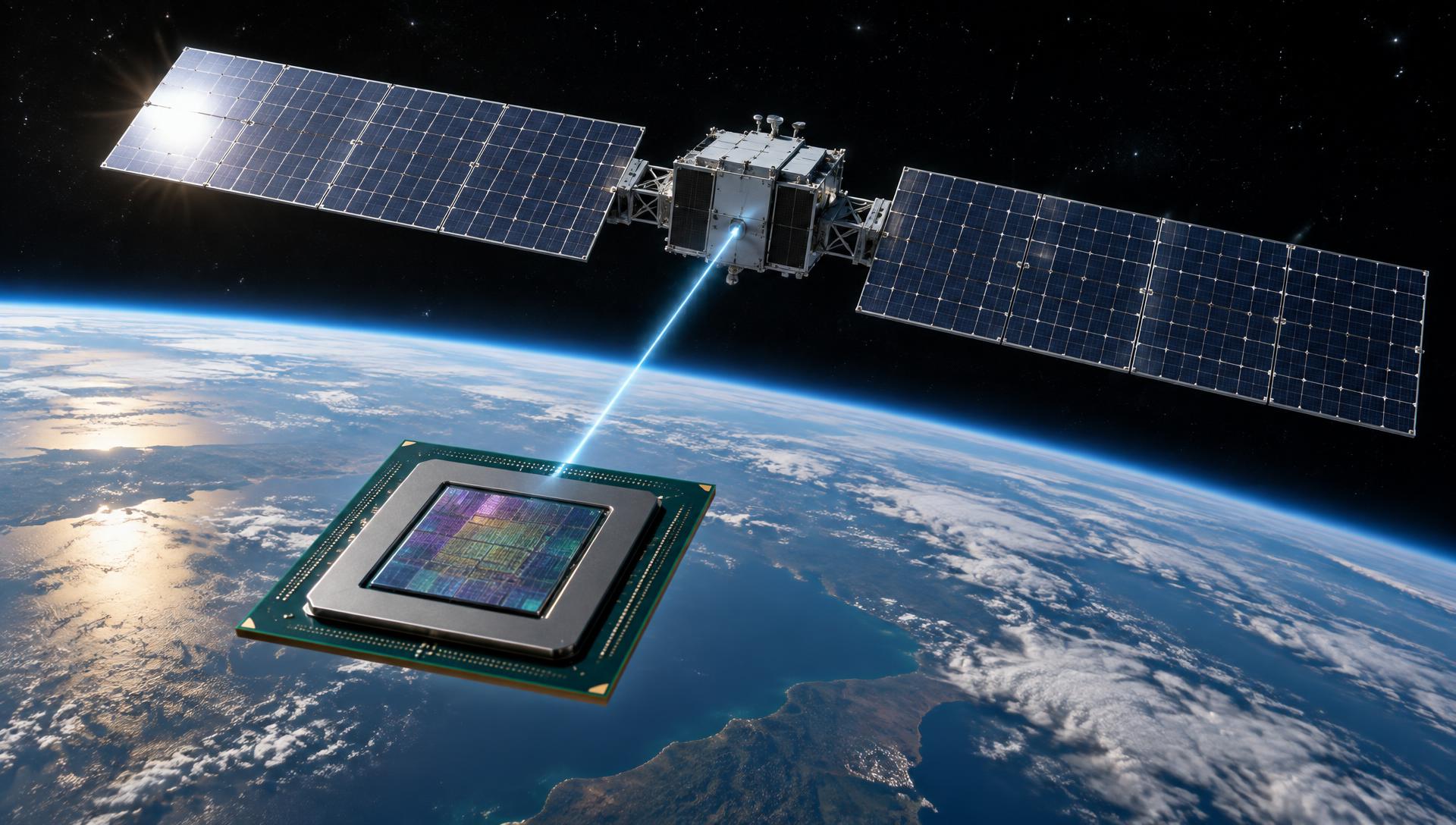
High-power LEO satellites are approaching 20 kW. Space-based AI computing is emerging, with proposed orbital data centers requiring 100–200 kW or more.
Higher power requirements are reshaping satellite design.
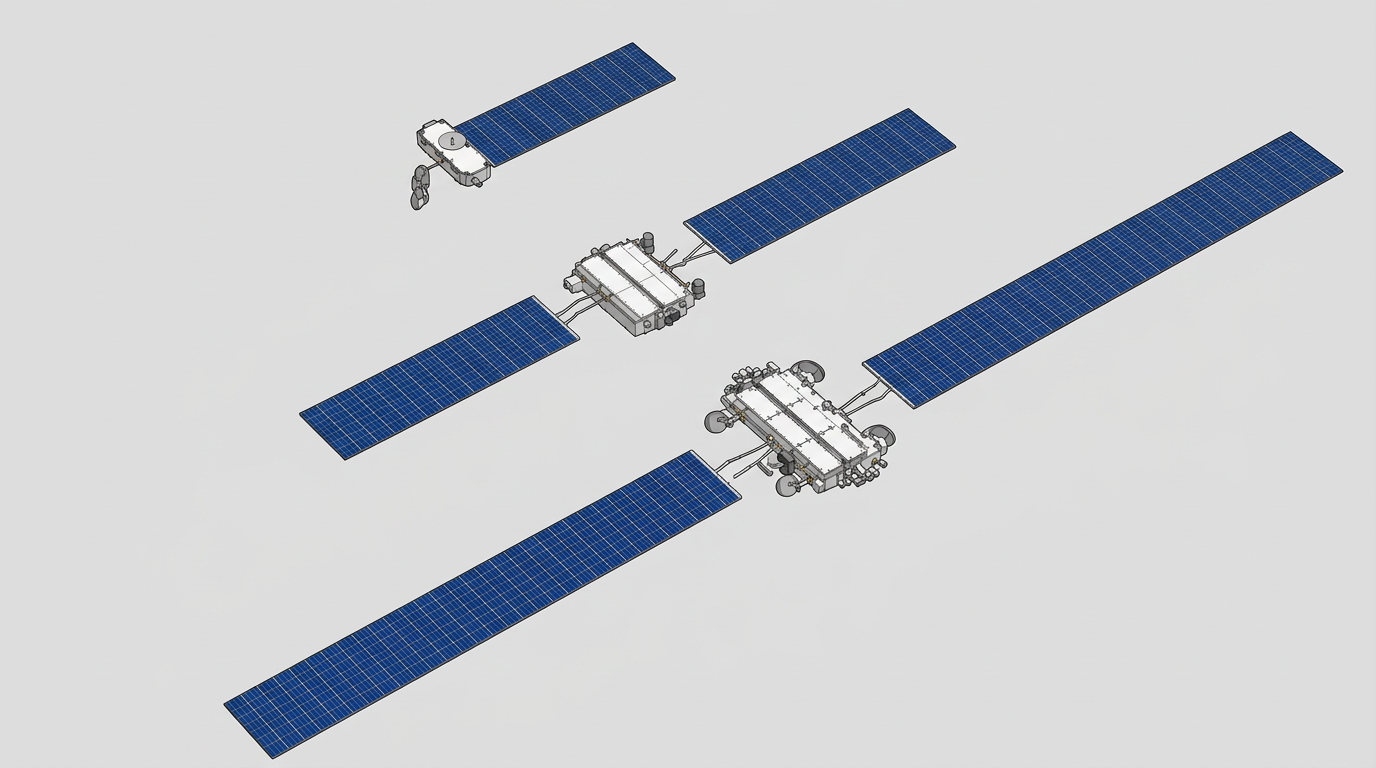
Increasing power requirements drive larger solar arrays, adding mass, complexity and drag. Radiation-resilient, high-efficiency cells can deliver more end-of-life power from smaller arrays.
More end-of-life power. Less mass and drag.
The Space Power Challenge
As satellite power requirements grow, maintaining power throughout the mission becomes increasingly critical. Radiation-induced degradation reduces solar cell output, creating a trade-off between initial array size and the power available at end of life.
Energetic particle radiation degrades solar cell performance over time.
Conventional silicon solar cells can lose approximately 15–20% of their power over a five-year LEO mission.*
Radiation-induced degradation reduces the electrical power available to operate the satellite at end of life.
Designers must compensate for degradation by oversizing the initial solar array or accepting less power at end of life.
* Illustrative, mission-dependent estimate. Actual degradation depends on orbit, shielding, cell architecture and operating conditions.
Improved end-of-life solar cell efficiency gives satellite designers greater flexibility: smaller, lighter solar arrays for the same mission requirements, or more power available over a longer mission with the same array size.
For example, an approximately 1 percentage point absolute efficiency improvement could provide sufficient additional power margin to extend a satellite's operational life from 5 to more than 7 years, depending on mission conditions and spacecraft design.
This estimate is an extrapolation from Quokka 3 modelling, not a demonstrated lifetime extension in orbit.
Proven EpiNex® advantages
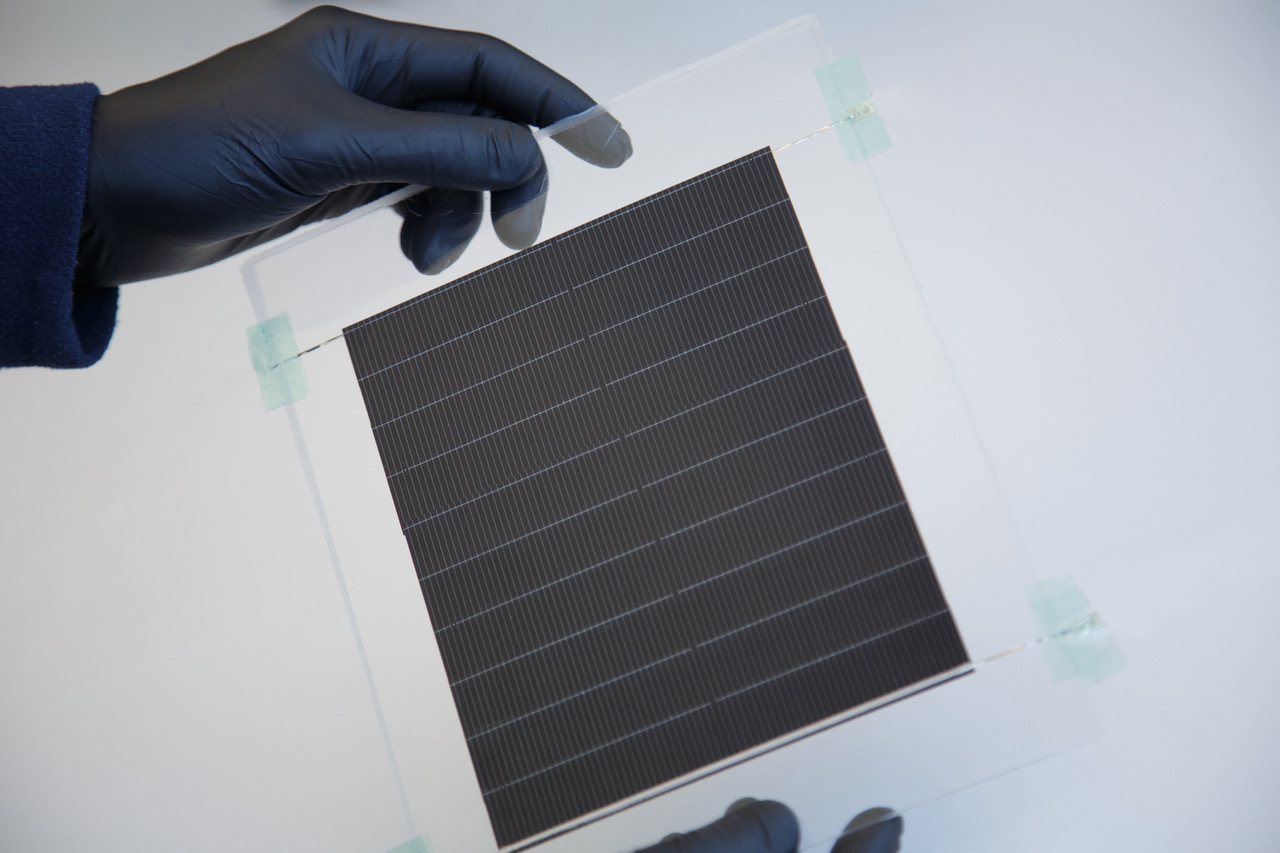
EpiNex combines ultra-thin silicon with engineered dopant profiles to reduce mass and improve radiation resilience.
06, System value
Choose your satellite size and see the potential impact on array area, mass and system cost.
Satellite size
20 kW
Total combined savings per satellite
$141,242
Launch cost $128,209 · Reaction-wheel hardware $13,033
Standard cells
108.9 m²
array area
93.3 kg
array mass
EpiNex® graded junction
102 m²
array area
62.9 kg
array mass
Array area
−6.3%
Mass saved
36.6 kg
Launch cost
−19%
Wheel torque
−40.7%
Saved per EOL watt
$6.41
Saved per wafer
$28.86
Example only, based on the NexWafe savings model: 20% BOL efficiency, 75% vs 80% EOL/BOL ratio, 130 vs 70 µm wafers, 100 vs 50 µm coverglass, 90% packing, $3,500/kg launch, 50 kg argon per 10 kW (LEO), $80k reaction-wheel suite with 60% fixed cost. Contact us for mission-specific analysis.
20% BOL efficiency is assumed for both cell technologies, with different EOL retention factors applied. Propellant and reaction-wheel savings are simplified system-level estimates, not directly demonstrated benefits of EpiNex®.
Contact us
Contact our team at . Our team is here to help.